
Shamanic Healing Practice
Ancient Wisdom for Healing & Growth
Shamanic healing practice is as old as humanity itself. Since ancient times, people have sought ways to relate to nature, unseen forces, and the spiritual world. Across all cultures, unique forms of shamanic practice emerged – alive, experiential, and deeply rooted in direct connection with nature, spirit, and energy.
While outward rituals and practices vary, the essence remains unchanged: shamanism is a universal human heritage and a way of seeing reality that recognizes the world as alive, conscious, and deeply interconnected.
Traditionally, shamans served their communities as healers, spiritual guides, mediators between worlds, storytellers, and keepers of ancestral knowledge. They were called upon in times of illness, transitions, crises, and personal change.
Today, in the face of ecological crises, collective trauma, and spiritual disorientation, the ancient wisdom of shamanism is more urgently needed than ever. We are in the midst of a profound paradigm shift – a time that calls us to remember who we truly are and how we are connected to the web of life.
Our Lost Relationship with Nature
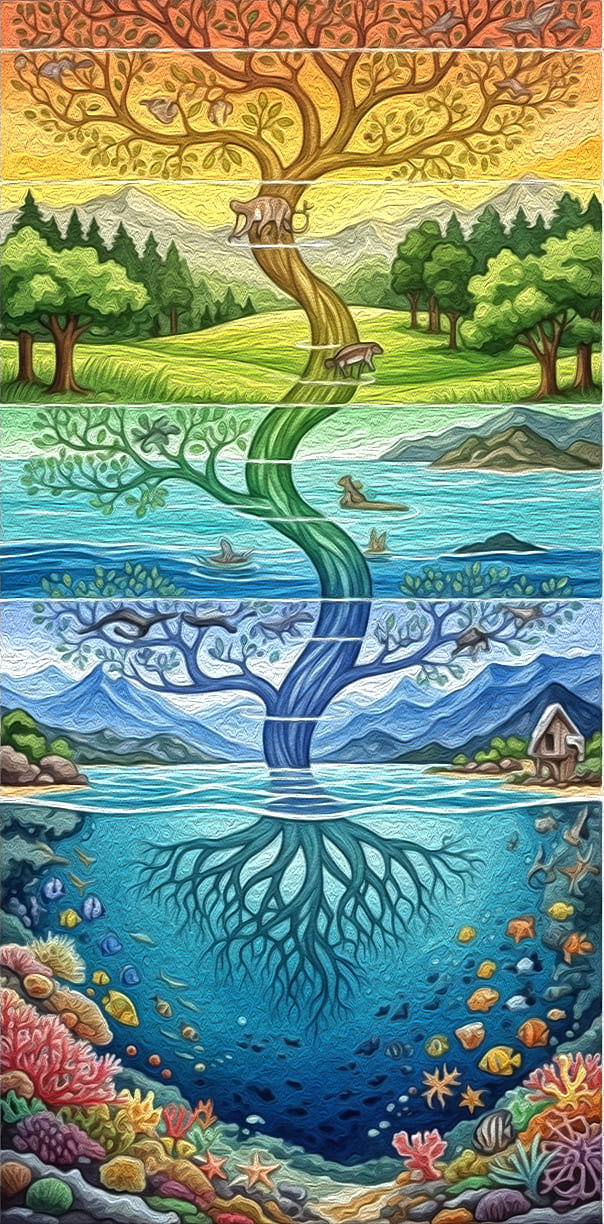
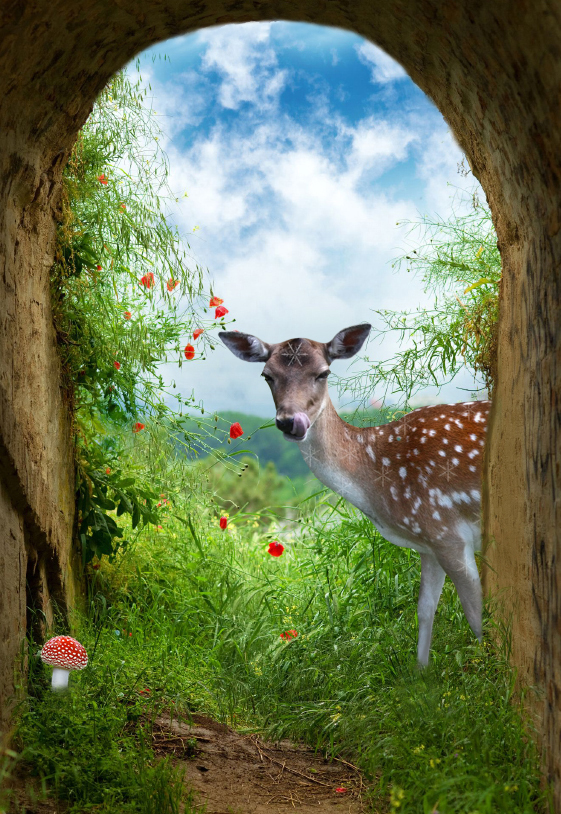
For most of human history, daily survival depended on living in harmony with the natural world. People did not see themselves as separate from nature, but as part of a living, interconnected ecosystem. Mountains, rivers, animals, plants, and the elements were perceived as conscious beings with whom one could communicate and cooperate.
Modern life has largely severed this connection. Disconnection from nature – and from our own inner nature – underlies many personal, social, and ecological crises. When we forget that we are part of the Earth, imbalance arises in our bodies, our communities, and on our planet.
Shamanism offers a way of remembering. It invites us to slow down, listen deeply, and restore our relationship with the living world. This reconnection does not mean returning to the past, but consciously integrating ancient wisdom into modern life.
Cross-Cultural Shamanism
Cross-cultural shamanism draws from universal shamanic principles found in indigenous traditions worldwide. Rather than imitating or adopting specific rituals, it focuses on shared practices such as journeying, ceremonies, connecting with helping spirits, and building relationships with nature.
It honors these cultures as living traditions, not as spiritual resources to be consumed. Practicing with respect and integrity means honoring lineages and understanding the difference between inspiration and appropriation.
Contemporary Shamanic Practice
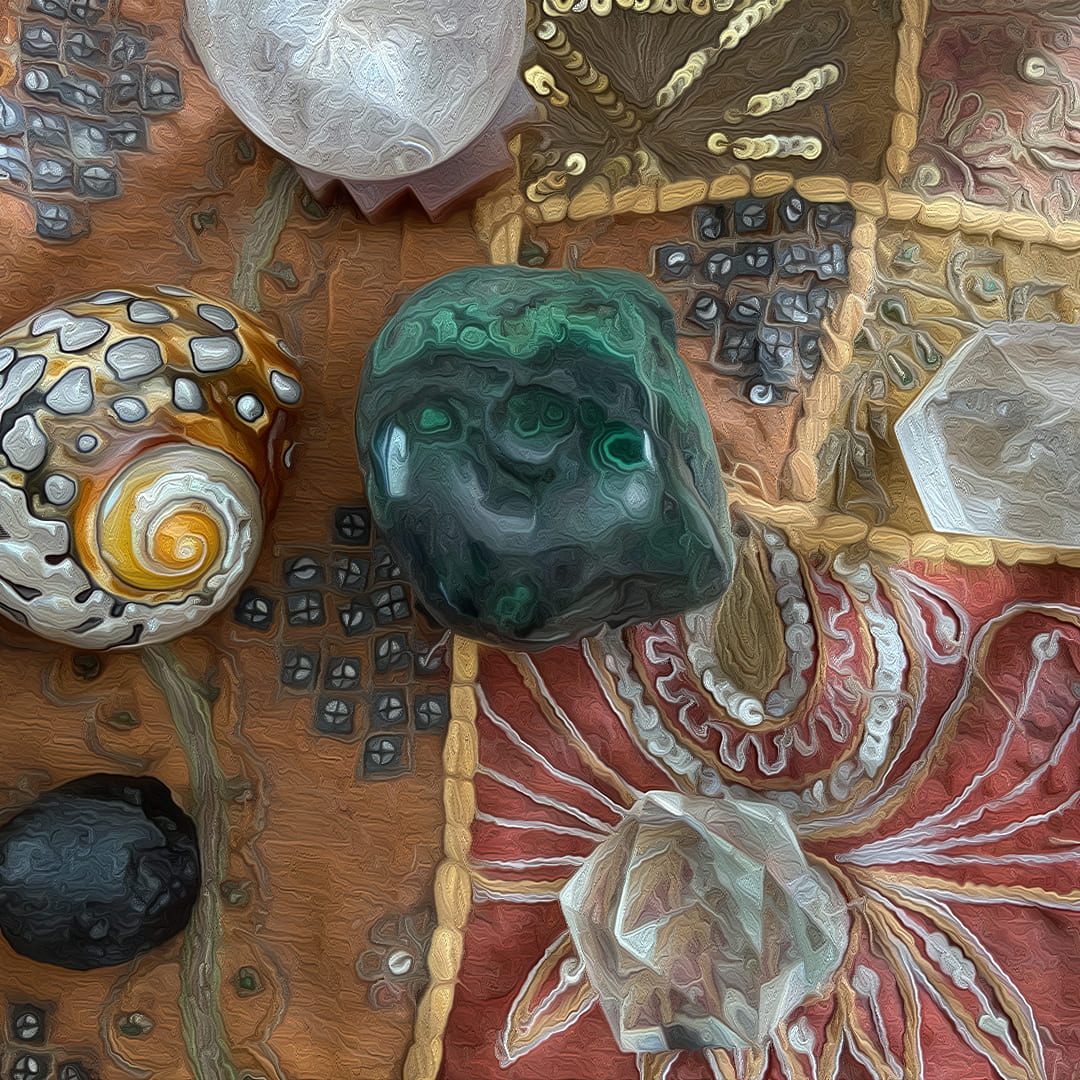
Modern shamanic practitioners work to bring timeless wisdom into our everyday lives. Through expanded states of awareness, they enter non-ordinary reality to receive guidance, healing, and insights from spirit beings, power animals, ancestors, and supportive allies.
These journeys are undertaken with clear intention. The wisdom gained is not meant to remain in altered states but to be applied practically in daily life. True shamanic practice is grounded, embodied, and relational – helping us to be more conscious and present in the world.
Healing from a Shamanic Perspective
From a shamanic perspective, imbalance and illness first arise on the mental and energetic level. This approach is not a replacement for medical or psychological care but a complementary view that also addresses spiritual and energetic causes.
Traumatic experiences, familial patterns, soul loss, and unresolved events leave energetic imprints that affect our wellbeing. In non-ordinary reality, healing occurs beyond linear time: past, present, and future exist simultaneously. Karmic and energetic patterns that no longer serve us can be released in this energetic or quantum field. This allows healing to occur on all levels.
Orientation through Rituals & Initiations
Life inevitably brings change: birth, loss, illness, endings, and new beginnings. In traditional cultures, rituals helped guide these transitions and give them meaning. In modern societies, many of these rituals are missing, leaving people feeling lost or uncertain during times of change.
Shamanic practice provides guidance and a safe framework for life transitions. By connecting with personal guides and spiritual allies, inner strength, clarity, and courage can emerge. Challenges become initiations that support growth and personal development, rather than being perceived as obstacles.
Shadow Work & Soul Retrieval
Shamanism does not mean avoiding darkness or focusing only on positive thinking. A key aspect is the willingness to face one’s shadow – the personality parts that have been suppressed, rejected, or left unexpressed.
Traumatic experiences can fragment parts of the soul or cause them to be lost. Shamanic practice supports finding these lost soul parts and reintegrating them.
This process is deeply alchemical: by acknowledging shadow aspects and reconnecting with lost parts, we restore balance, vitality, and authenticity. The resulting joy is not superficial but a deep resonance with life.

Shamanic Self-Healing
Shamanism offers powerful pathways for self-healing and personal growth. Through deep self-reflection and experiential practices, we remember who we are beyond conditioning, roles, and expectations.
This remembering clarifies our soul purpose – not as a goal to achieve, but as a lived expression of our essence. Shamanic practice supports us in embodying our gifts and sharing them with the world in meaningful, grounded ways.
Universal methods such as healing ceremonies, shamanic journeys, energy work, and rites of passage are still practiced worldwide. Despite cultural differences, they share a common goal: restoring harmony between body, soul, spirit, and the natural world.
Healing Beyond the Individual
Everything is interconnected, so personal healing automatically contributes to collective healing. When ancestral patterns are released, family systems shift. When people reconnect with nature, ecological awareness grows.
Many contemporary practitioners feel called to work on behalf of the Earth. Environmental crises are not only ecological but also expressions of spiritual disconnection. Shamanism offers ways to listen to the land, connect with the spirits of place, and restore balance between humans and the Earth.
Shamanism is lived experience. It invites us into deeper relationships – with ourselves, nature, spirit, and the unseen dimensions of life. By remembering these connections, we renew ourselves, our communities, and our relationship with Mother Earth.
Elke Savala is a certified shamanic practitioner in the Peruvian Pachakuti Mesa Tradition and has also studied and practiced in other shamanic lineages. Her work is inspired by traditional wisdom while remaining accessible and relevant to modern life.
She offers shamanic counseling and healing sessions, guiding individuals on their path of transformation, integration, and reconnection with their authentic self. Her approach is grounded, intuitive, and present.
Contact Elke Savala for more information or to schedule a session.